
Itineraries · Seville, Spain
3 Days in Seville: A Realistic Itinerary for First-Time Visitors
A practical three-day Seville itinerary covering the major landmarks, Santa Cruz, Plaza de España, Triana and flamenco without turning the trip into a race.
By MI Traveler editorial team · Updated August 7, 2026 · 14 min read
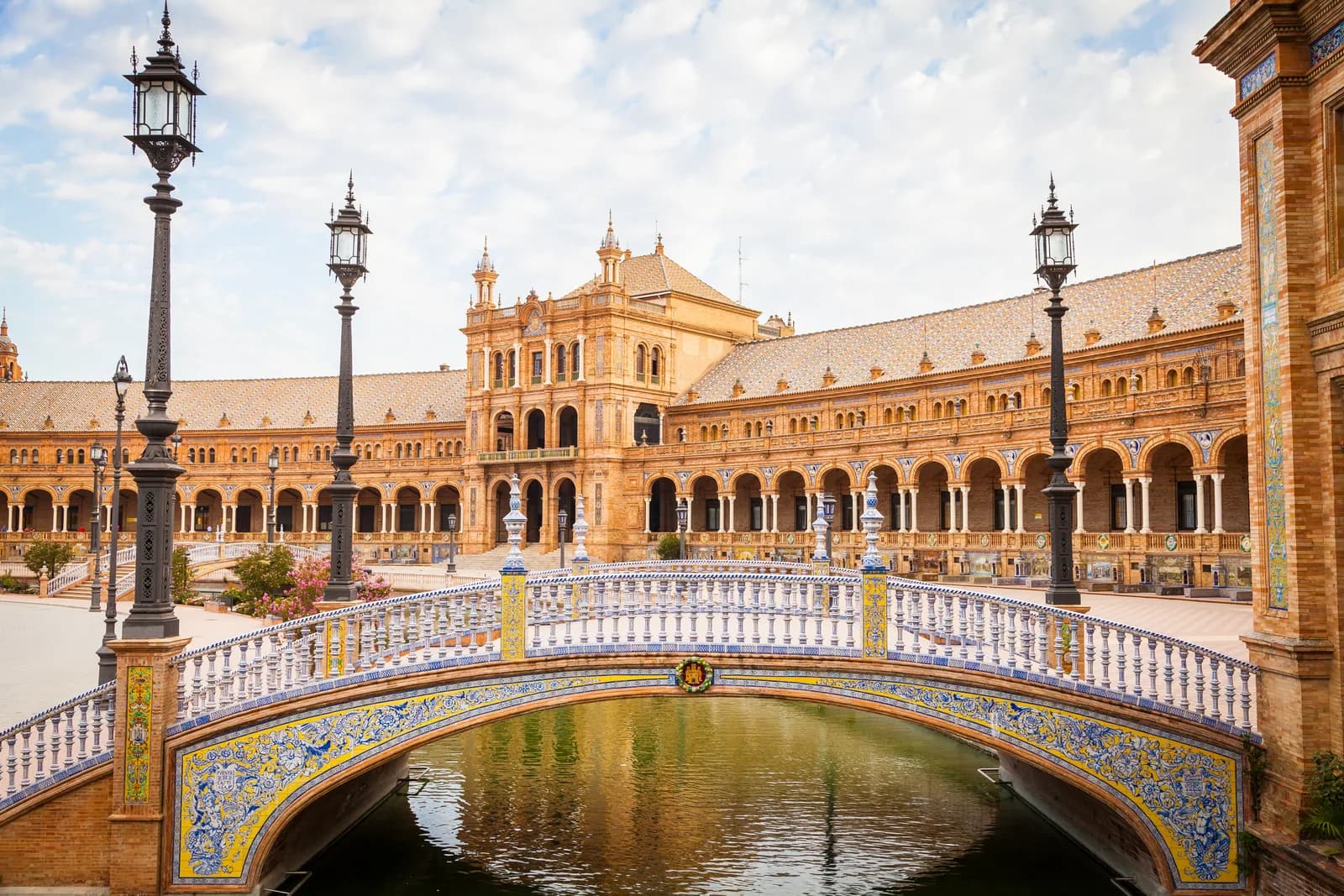
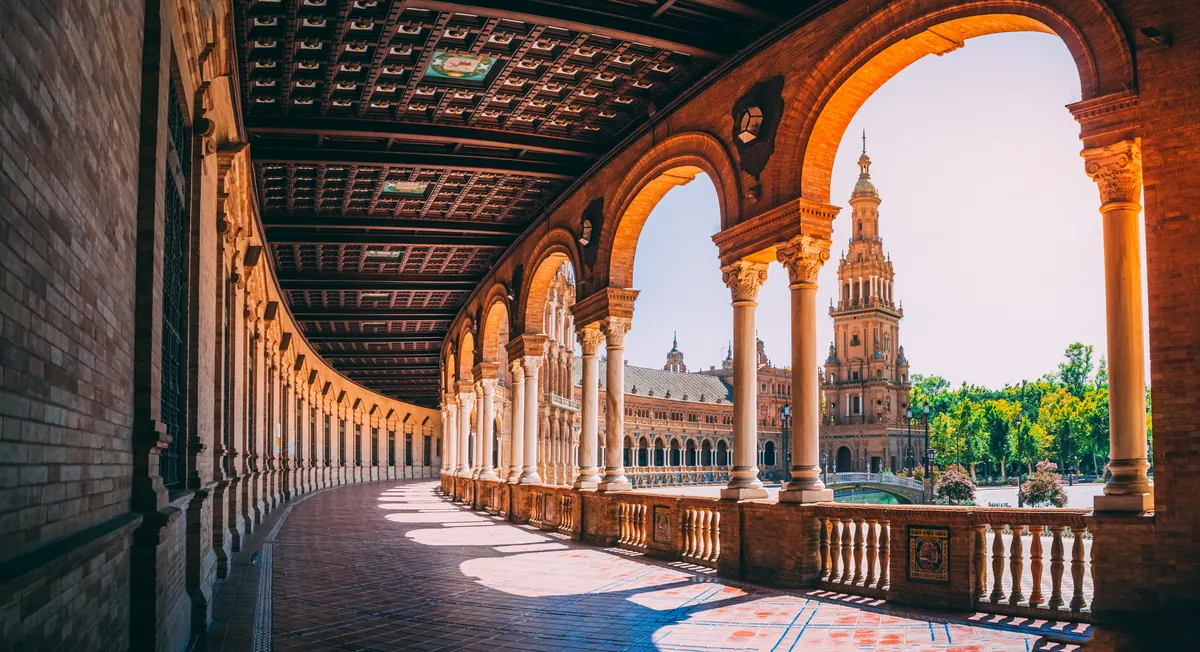
Plaza de España is one of the major landmarks in a realistic first-time Seville itinerary.
Three days is enough to see Seville's major landmarks, explore a few different neighbourhoods and still leave space for tapas, shade and the occasional decision to sit down instead of visiting another church.
The main mistake is treating the city like a checklist.
The Cathedral and Royal Alcazar deserve proper time. Plaza de España works better when combined with Maria Luisa Park rather than squeezed between unrelated attractions. Triana deserves more than a quick photograph from the opposite side of the river.
This itinerary groups nearby places together, limits unnecessary backtracking and keeps the hottest hours flexible. It is designed for first-time visitors who want to see the essentials without spending three days checking the time.
For broader planning, start with the Seville Travel Guide. If your dates are flexible, compare seasons in our Best Time to Visit Seville guide before fixing the exact order of your days.
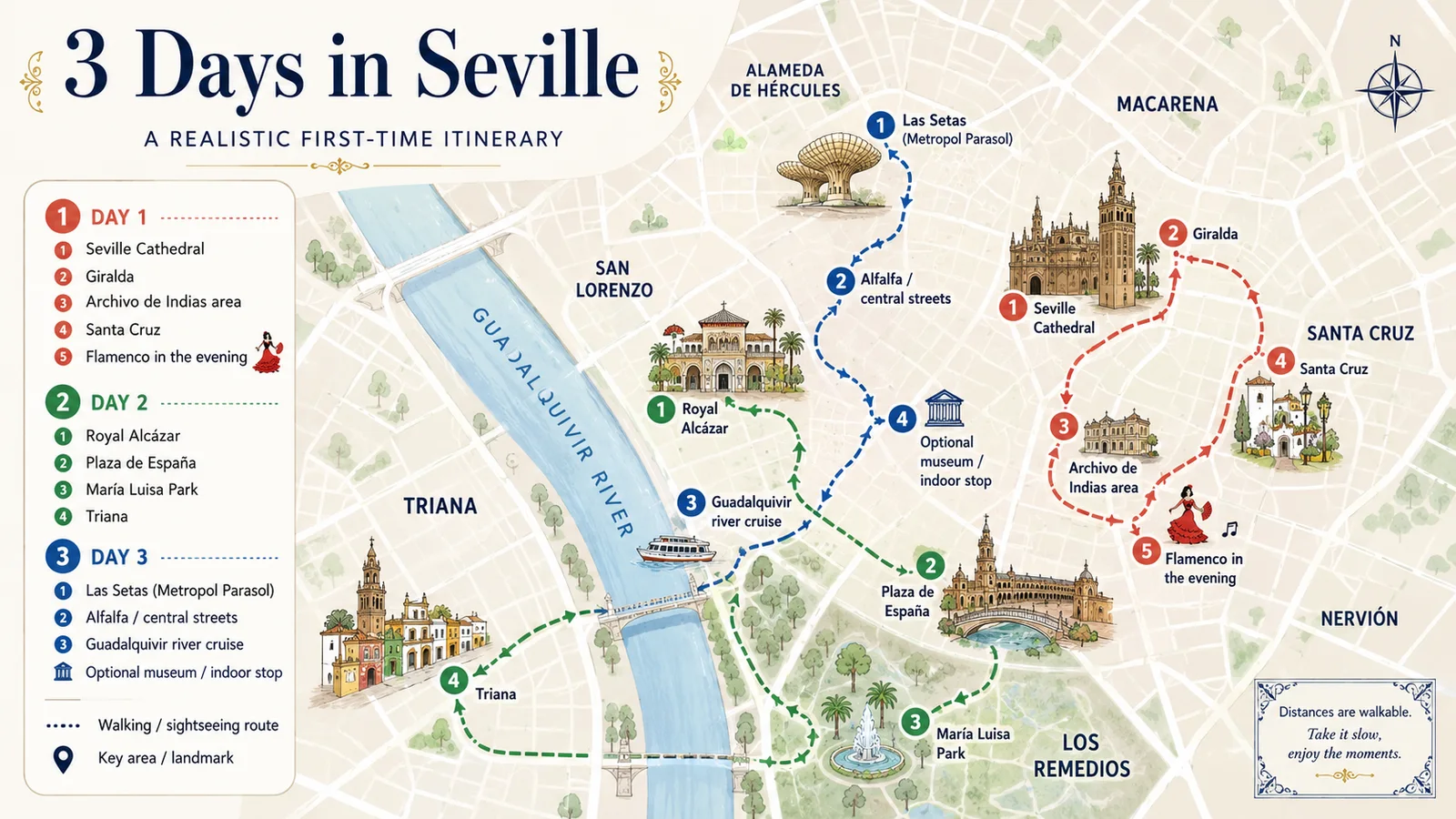
Quick itinerary: Spend day one around the Cathedral, Giralda and Santa Cruz, followed by flamenco in the evening. Use day two for the Royal Alcazar, Plaza de España and Maria Luisa Park before crossing to Triana. On day three, explore central Seville at a slower pace, including Las Setas, the riverside and one optional paid experience.
Three days in Seville at a glance
| Day | Morning | Afternoon | Evening |
|---|---|---|---|
| Day 1 | Seville Cathedral and Giralda | Santa Cruz and a slower lunch break | Flamenco or an evening walk |
| Day 2 | Royal Alcazar | Plaza de España and Maria Luisa Park | Triana |
| Day 3 | Las Setas and central Seville | Riverside or optional river cruise | Sunset viewpoint, tapas or a relaxed final evening |
This route assumes three reasonably full days. If your arrival or departure reduces one of them, prioritise the Cathedral, Giralda, Royal Alcazar and the parts of the city that match your interests rather than trying to complete every stop.
Before following this itinerary
Book the two major monuments first
Seville Cathedral and the Royal Alcazar both use timed entry.
Choose those times before planning meals, flamenco or other paid activities. Exact schedules can change because both are active historic and religious sites.
For most visitors, it is more comfortable to visit one major monument on day one and the other on day two instead of completing both in a single continuous tour.
Compare ticket options in our Seville Cathedral and Giralda ticket guide.
Read our guide to Alcazar of Seville tickets.
Adjust the route for summer
Seville's summer heat is not a minor inconvenience.
Long outdoor walks between approximately 14:00 and 18:00 can be uncomfortable or unsafe during periods of extreme heat. Use the hottest part of the day for lunch, a hotel break, an indoor attraction or a very serious relationship with air conditioning.
In hot weather:
- Book major monuments earlier where possible.
- Carry water.
- Cross exposed plazas before the strongest afternoon heat.
- Do not plan Plaza de España and a long walk through Maria Luisa Park at the hottest time.
- Leave more space between activities.
- Move river walks and viewpoints to the evening.
Do not schedule every meal
Lunch and dinner in Seville generally happen later than many international visitors expect.
A rigid restaurant schedule can make an itinerary more stressful than useful. Reserve one meal when the restaurant matters, but leave room for spontaneous tapas and places discovered along the route.
Day 1: Cathedral, Giralda, Santa Cruz and flamenco
Day one focuses on Seville's historic centre.
The main sights are close together, but the Cathedral and Giralda require more energy than their location on a map suggests. Keep the rest of the day deliberately lighter.
Morning: Seville Cathedral and the Giralda
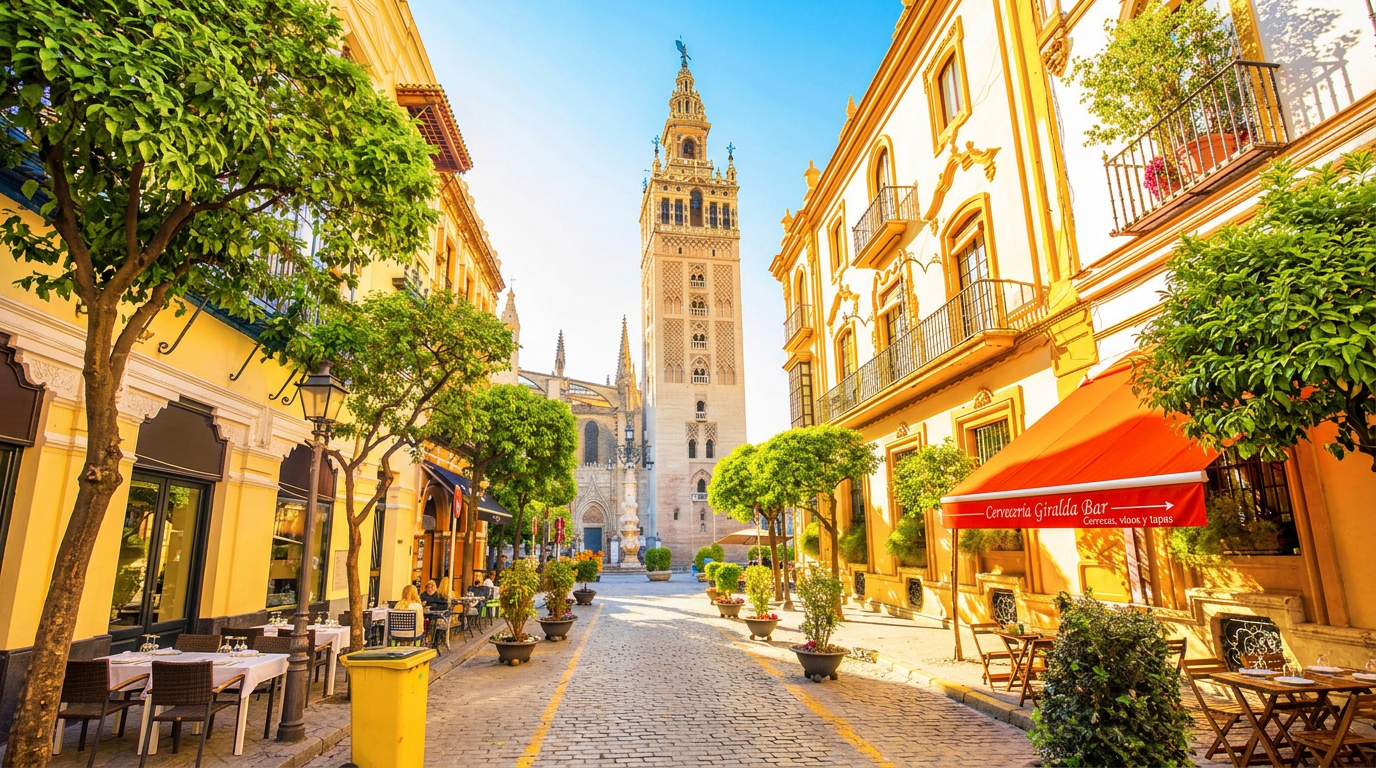
Start with Seville Cathedral and the Giralda.
The Cathedral was built on the site of the former Almohad mosque and is considered the largest Gothic cathedral in the world. Its bell tower began as the mosque's minaret, which explains the broad internal ramps used for most of the climb.
Allow approximately 1.5 to 2 hours for the Cathedral, Giralda and Patio de los Naranjos.
The Giralda climb is manageable for many visitors, but it is not effortless. The incline continues for a considerable distance, the upper section includes steps and the route can feel crowded.
Before booking, compare standard entry, audio-guide options and guided tours in our Seville Cathedral ticket guide.
Late morning: Archivo de Indias surroundings
After the Cathedral, stop at the Archivo de Indias on Plaza del Triunfo.
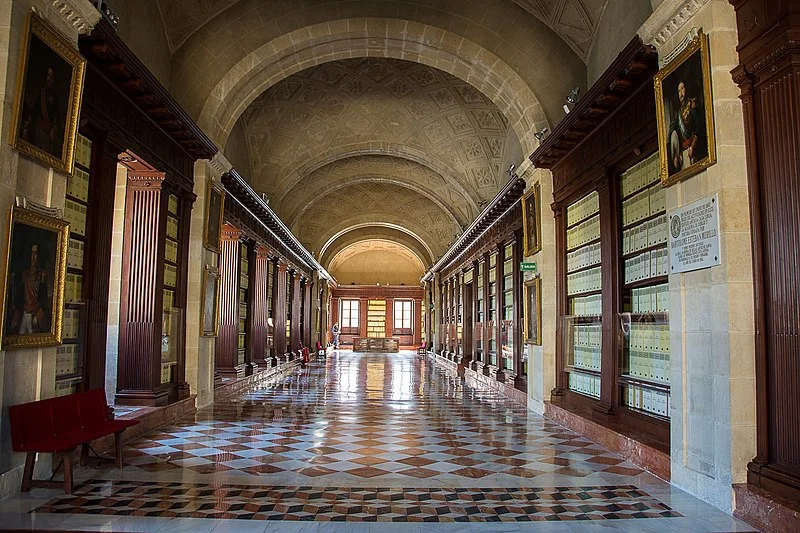
The monumental areas and temporary exhibitions at the Archivo General de Indias can be visited free of charge. Normal visiting hours are Tuesday to Saturday from 09:30 to 17:00, and Sundays and public holidays from 10:00 to 14:00. It is closed on Mondays. Entry may occasionally be limited when visitor capacity is reached.
The Archivo de Indias is part of Seville's UNESCO-listed monumental complex together with the Cathedral and Royal Alcazar. You do not need to dedicate a large part of the day to it; for most first-time visitors, it works well as a short stop between the Cathedral and Santa Cruz.
Check the official schedule shortly before visiting, as holiday or special-event hours can change.
Lunch and early afternoon: Santa Cruz
Continue into Santa Cruz for lunch and a slower walk.
Santa Cruz is beautiful, central and highly visited. Expect narrow lanes, small plazas, souvenir shops and tour groups moving through the same photogenic corners.
Useful areas include:
- Plaza de Dona Elvira
- Plaza de Santa Cruz
- Callejon del Agua
- Plaza de los Venerables
- The streets around Hospital de los Venerables
- The edge of Jardines de Murillo
There is no need to follow every suggested turn on a map. Santa Cruz works better when you allow some wandering, provided you are not pulling luggage over the paving stones.
In hot weather, use the early afternoon for a long lunch or hotel break rather than continuing directly into an exposed walk.
For a broader comparison of attractions, see our guide to the best things to do in Seville.
Evening: choose flamenco or an unstructured evening
Flamenco fits naturally on the first evening because many venues are close to the historic centre.
A performance usually works better than adding another daytime monument. It gives the itinerary a change of pace and avoids turning the entire day into architecture.
Not every visitor needs the most expensive dinner-and-show package. Decide whether your priority is:
- A smaller traditional venue
- A theatrical production
- A performance with dinner
- A central location
- A premium venue with more elaborate staging
Compare the main formats and venues in our guide to the best flamenco shows in Seville.
Alternative evening
If flamenco is not a priority, keep the evening simple:
- Walk around the illuminated Cathedral area.
- Continue towards Plaza Nueva.
- Have tapas around Arenal.
- Visit a rooftop viewpoint.
- Explore Santa Cruz after the daytime tour groups thin out.
See more options in our guide to things to do in Seville at night.
Day 2: Royal Alcazar, Plaza de España and Triana
Day two combines one major indoor-and-garden attraction with one of Seville's most recognisable public spaces.
The route is geographically logical, but weather matters. In summer, do not schedule the Alcazar gardens, Plaza de España and Maria Luisa Park as one uninterrupted afternoon walk.
Morning: Royal Alcazar of Seville
Start at the Royal Alcazar.
The complex includes palaces, courtyards, decorative interiors and extensive gardens. It is not a single building that can be completed in 30 minutes.
Allow approximately 2 to 3 hours for a first visit, depending on your interest in architecture and gardens.
Standard entry may be sufficient if you are comfortable exploring independently. A guided tour is more useful if you want the different historical periods and decorative elements explained.
The Royal Apartments may require a separate reservation or ticket depending on the selected product and current visitor arrangements. Verify the current inclusions before booking.
Our Alcazar of Seville ticket guide explains the difference between standard entry, guided tours and combination options.
Should you book a Cathedral and Alcazar combination tour?
A combination tour can be efficient when:
- You have less than three full days.
- You want one guide for both monuments.
- You prefer one organised booking.
- You are comfortable with several consecutive hours of sightseeing.
For this three-day itinerary, separate visits are usually more comfortable. You can give each monument proper attention and avoid processing several centuries of history before lunch.
Lunch and rest
After the Alcazar, have lunch near the historic centre or return to your accommodation for a break.
This is particularly important in summer. Plaza de España has large exposed areas, and walking there during the strongest heat is not the clever local adaptation some visitors hope it will become.
Late afternoon: Plaza de España
Visit Plaza de España later in the afternoon when possible.
The semicircular building, tiled provincial alcoves, bridges and canal make it one of Seville's most recognisable landmarks. Entry to the open plaza itself is normally free, although access can occasionally change for events, filming or maintenance.
Allow approximately 45 to 75 minutes if you want to walk around, inspect some of the ceramic details and take photographs without rushing.
The small rowing boats are optional. They can be entertaining, but they are not necessary to understand or enjoy the plaza.
Maria Luisa Park
Continue through Maria Luisa Park if the weather is comfortable.
The park provides more shade than Plaza de España and includes fountains, planted paths and smaller architectural details. It is a useful place to slow down rather than another attraction that needs to be completed.
Shorten the park when:
- The heat remains severe.
- You have limited mobility.
- Your Alcazar visit took longer than expected.
- You want more time in Triana.
- You already spent a large part of the day walking.
Evening: cross to Triana
Head towards Triana in the evening.
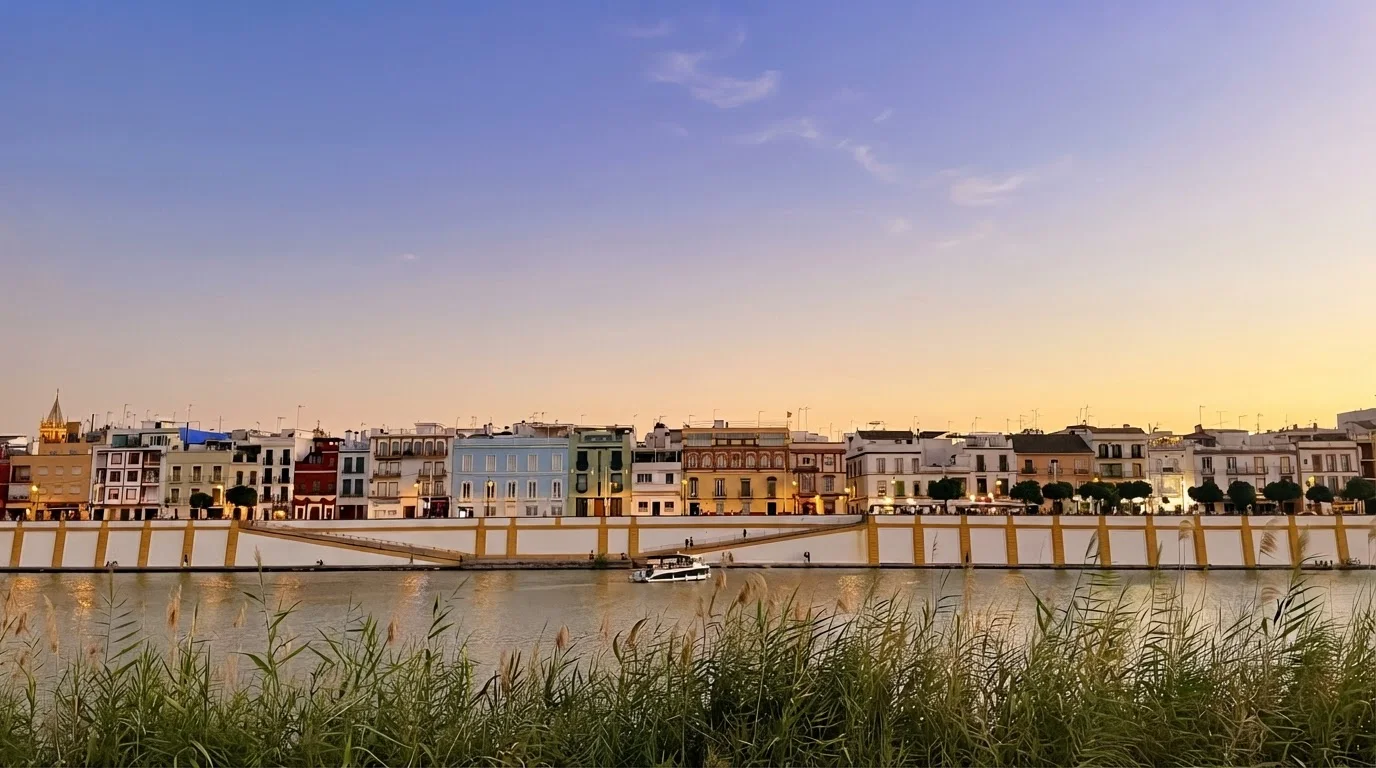
Crossing the Isabel II Bridge provides views back towards central Seville and leads directly to Plaza del Altozano.
Triana can feel more residential and locally grounded than Santa Cruz, although the streets closest to the bridge are still popular with visitors.
A simple evening route can include:
- Isabel II Bridge
- Plaza del Altozano
- Mercado de Triana
- Calle San Jacinto
- Calle Betis
- A tapas stop away from the most obvious riverfront tables
The market is more useful earlier in the day if shopping or food stalls are the priority. In the evening, focus on the neighbourhood streets, river views and dinner.
Do not treat Triana as undiscovered or free from tourism. It is popular, but it still gives this itinerary a different rhythm.
Day 3: Las Setas, central neighbourhoods and the river
Day three is intentionally flexible.
By this point, you will know whether you want another structured activity or a slower final day. Do not fill every hour simply because the itinerary has space on the screen.
Morning: Las Setas and Encarnacion
Begin around Plaza de la Encarnacion and Las Setas.
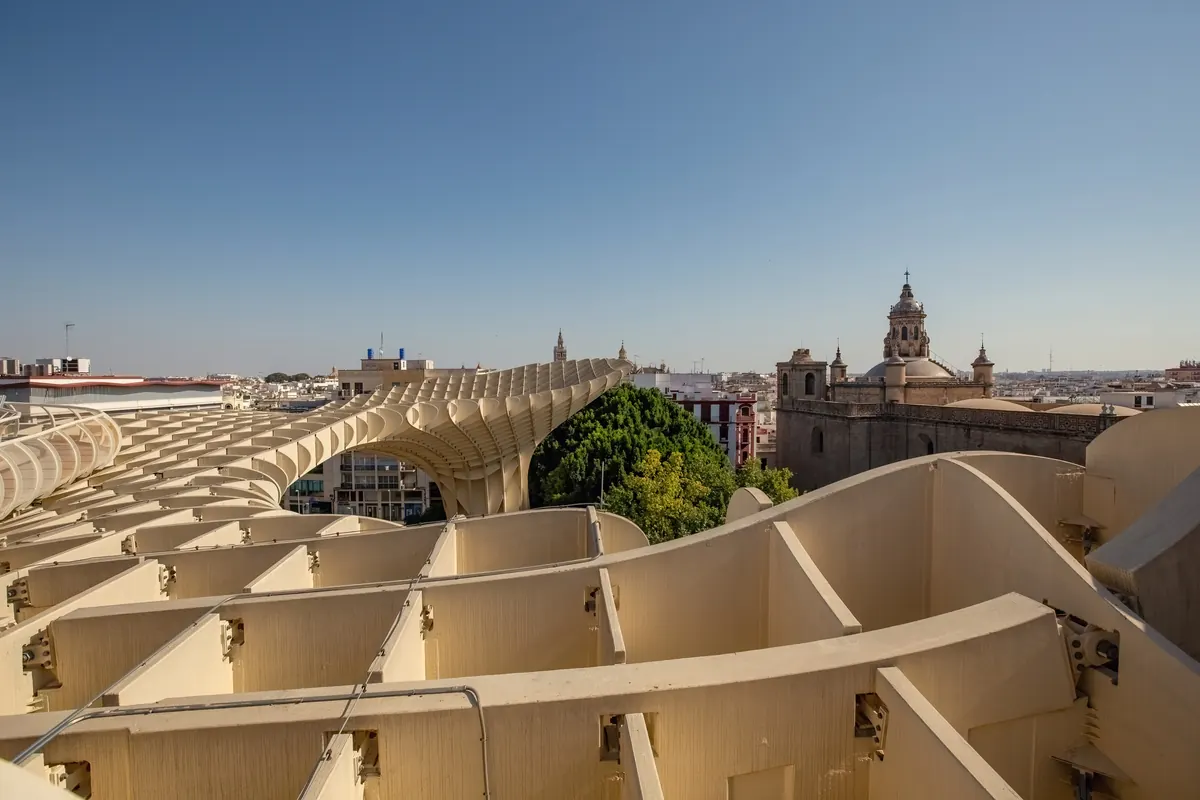
The structure provides a strong contrast to Seville's historic architecture. The elevated walkway and viewpoint require a ticket, while the plaza and exterior can be seen without entering.
Visit the viewpoint when:
- You want broad city views.
- You enjoy contemporary architecture.
- You did not climb the Giralda.
- The weather is clear.
- You prefer an elevated sunset or morning viewpoint.
Seeing the exterior may be enough when:
- You already climbed the Giralda.
- Viewpoints are not a priority.
- You have limited time.
- The current ticket price does not feel right for your plans.
Explore Alfalfa and the central streets
From Encarnacion, continue through parts of Alfalfa and central Seville.
Possible stops include:
- Plaza del Salvador
- Calle Cuna
- Calle Sierpes
- Plaza de San Francisco
- Plaza Nueva
- Small streets around Alfalfa
This should be a neighbourhood walk rather than a shopping checklist.
Lunch: keep it flexible
Use the final day for the type of meal you have not yet tried.
That may mean:
- A traditional tapas bar
- A market lunch
- A longer sit-down meal
- A modern Andalusian restaurant
- Returning to somewhere you noticed earlier
Restaurant quality, opening days and reservation patterns change, so avoid building this itinerary around a specific venue unless you have checked it close to your travel dates.
Afternoon option 1: Guadalquivir river cruise
A river cruise is an easy activity when you want to rest your feet and see the city from a different angle.
It is not the best choice for visitors expecting a dramatic scenic cruise through untouched landscapes. Much of the route is urban, and the value depends on weather, commentary, boat comfort and expectations.
A cruise makes more sense when:
- You want a seated activity.
- The weather is pleasant.
- You enjoy urban river views.
- You need a break from monuments.
- You are travelling with someone who cannot manage another long walk.
It is easier to leave out when:
- Your schedule is already full.
- You expect a major sightseeing highlight.
- The weather is excessively hot or unpleasant.
- You would rather spend the time in Triana or a museum.
Afternoon option 2: museum or indoor break
Choose an indoor attraction instead of the river when the weather is poor or extremely hot.
Possible options include:
- Museo de Bellas Artes
- Centro Ceramica Triana
- Hospital de los Venerables
- Palacio de las Duenas
- Casa de Pilatos
Do not assume they are all close to one another. Select one based on your location and interests.
Verify current schedules and ticket conditions before building detailed access plans around any single museum or historic house.
Afternoon option 3: more time in Triana
Return to Triana if the previous evening felt too short.
Daylight is better for:
- Triana Market
- Ceramic shops
- Centro Ceramica Triana
- Neighbourhood streets away from Calle Betis
- Seeing the ceramic decoration around the district
This is a better option than forcing another monument into the plan when you prefer neighbourhoods and local context.
Final evening: choose one last Seville experience
Keep the final evening open.
Good options include:
- Sunset around the river
- A viewpoint at Las Setas
- Tapas in a neighbourhood you liked
- A second flamenco performance only if you are genuinely interested
- A quiet walk through the centre
- An early night before departure
Do not schedule a farewell dinner, sunset viewpoint, river cruise, rooftop drinks and late flamenco on the same evening.
Seville generally improves when the itinerary stops trying to win.
Is three days enough in Seville?
Three days is enough for a strong first visit.
You can see the Cathedral, Giralda, Royal Alcazar, Plaza de España, Santa Cruz and Triana without compressing both major monuments into one morning.
Three days is not enough to see every palace, church, museum and neighbourhood. That is not a failure of the itinerary.
Stay longer when you want to:
- Visit several museums and historic houses.
- Take a day trip.
- Explore neighbourhoods beyond the centre.
- Work remotely while travelling.
- Experience the city at a slower pace.
- Attend a major festival.
Travelling for longer? See our Seville Digital Nomad Guide.
What to leave out when you are short on time
If one of your three days is incomplete, remove optional activities before removing the core sights.
Prioritise:
- Royal Alcazar
- Seville Cathedral and Giralda
- Plaza de España
- One neighbourhood evening in Santa Cruz or Triana
Remove first:
- A river cruise
- Extra museums
- A second viewpoint
- Lengthy shopping stops
- Multiple historic houses
- Attractions added only because they appeared on another checklist
Do not remove all unstructured time. A three-day itinerary with no room for lunch, queues or changing your mind is not a realistic itinerary.
Where to stay for this itinerary
The historic centre, Arenal, Santa Cruz, Alfalfa and parts of Triana all work for this route.
Santa Cruz
Convenient for the Cathedral and Alcazar, but touristy and potentially busy.
Arenal
Central, practical for the river and within walking distance of the major monuments.
Alfalfa and Encarnacion
Useful for Las Setas, central streets and a broad range of restaurants.
Triana
Good for a more neighbourhood-focused atmosphere, but requires crossing the river for several major sights.
Alameda
Better for nightlife and longer stays, although slightly less convenient for a tightly scheduled first visit.
Compare the neighbourhoods in our guide to where to stay in Seville.
How to get around during three days in Seville
Most of this itinerary can be completed on foot.
The Cathedral, Alcazar and Santa Cruz are clustered together. Plaza de España and Maria Luisa Park sit south of the historic centre. Triana is reached by crossing the river.
Public transport becomes useful when:
- Your accommodation is outside the centre.
- The weather is extremely hot.
- You have limited mobility.
- You want to reduce walking between Plaza de España and another district.
- You are travelling with children.
Taxis, Uber and Cabify also operate in Seville.
Arriving by plane? Compare your options in our guide to Seville Airport to the city centre.
Practical tips for this three-day itinerary
Wear shoes you already trust
Historic paving, Giralda ramps and several hours of walking are a poor time to test new footwear.
Carry water
This matters throughout the year and becomes essential in warmer months.
Confirm ticket times the day before
Check the official confirmation, meeting point and selected language for every tour.
Leave buffers between bookings
Security checks, queues and slow lunches do not fit neatly into calendar blocks.
Check the religious and event calendar
Cathedral access can change for worship. Semana Santa and Feria can affect accommodation, traffic, crowds and availability across the city.
Do not rely only on midday opening assumptions
Some smaller businesses close or operate different hours. Verify specific places before building the day around them.
Save offline maps
The central streets are walkable, but Santa Cruz occasionally makes confident map users reconsider their relationship with direction.
Continue planning your Seville trip
- Seville Travel Guide
- Best Things to Do in Seville
- Seville Cathedral Tickets
- Alcazar of Seville Tickets
- Best Flamenco Shows in Seville
- Where to Stay in Seville
- Best Time to Visit Seville
- Things to Do in Seville at Night
- Seville Airport to City Centre
Final recommendation
Use the first two days for the landmarks that define a first visit: the Cathedral, Giralda, Royal Alcazar and Plaza de España.
Use the third day to understand more of the city rather than collecting additional ticket stubs. Explore central neighbourhoods, return to Triana, take a river cruise or simply spend longer over lunch.
Three days in Seville should feel full, but it should not feel like a work assignment.
If a plan requires you to leave the Alcazar early, cross the city in the afternoon heat and eat dinner while checking the time for the next booking, remove something. The city will cope.