
Digital Nomad Guide · Seville, Spain
Seville Digital Nomad Guide: Best Areas, Cafes, Coworking & Long-Stay Tips
Thinking of working remotely from Seville? Here's a practical digital nomad guide to the best areas, cafes, coworking, housing, heat, lifestyle, and long-stay tips.
By MI Traveler editorial team · Updated July 2, 2026 · 18 min read
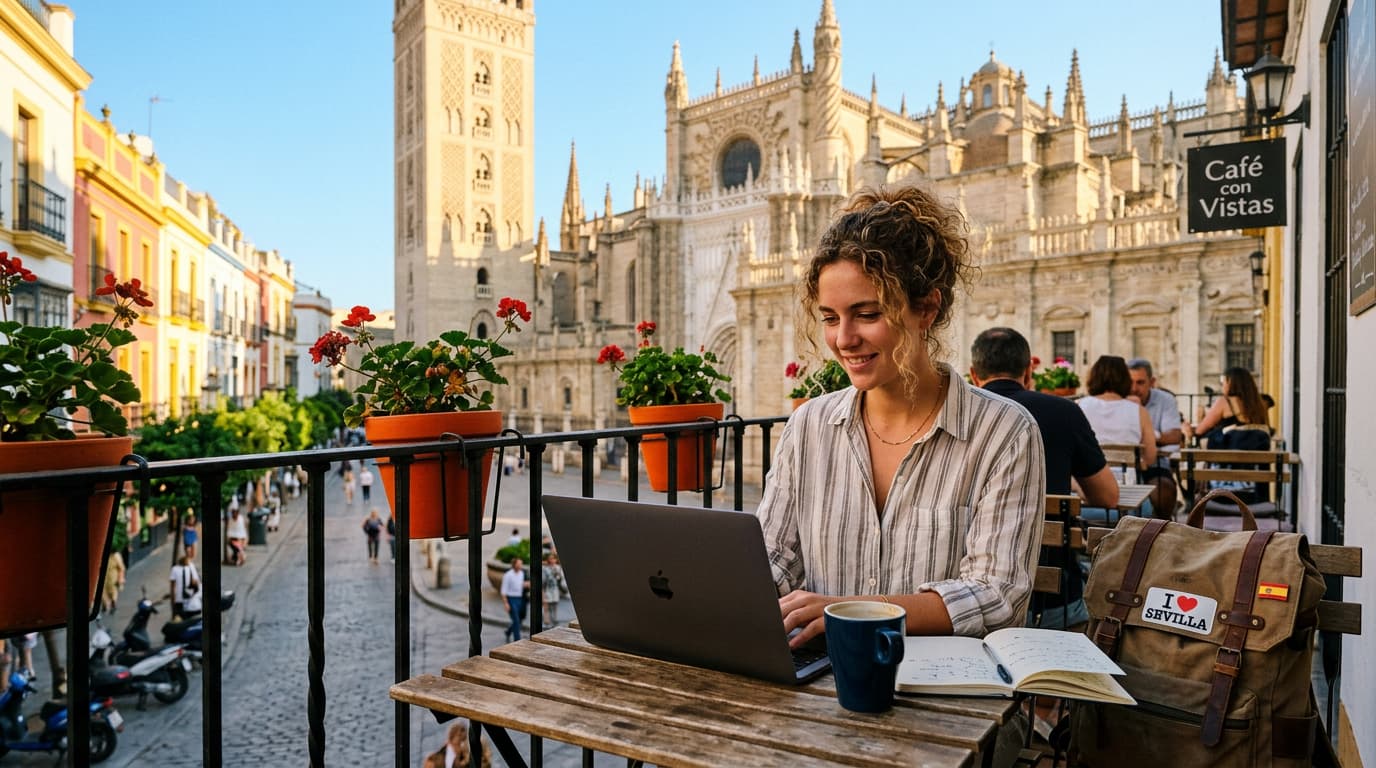
Seville can be a great remote-work base if you choose the right neighborhood and respect the summer heat.
Seville can be a very good digital nomad base if you choose the right season, the right neighborhood, and an apartment with air conditioning that is not just decorative.
The city has a lot going for it: walkable streets, beautiful architecture, good food, a slower rhythm than Madrid or Barcelona, and enough culture to keep weekends interesting. It also has a few things you should take seriously: summer heat, tourist-heavy areas, older buildings, and the difference between "cute apartment" and "comfortable place to work eight hours a day."
This guide is for remote workers and long-stay visitors who are thinking about spending a few weeks or months in Seville, or Sevilla as it is written locally.
For wider trip planning, start with the Seville travel guide. If you are choosing a base, compare where to stay in Seville. For weekends and slower days, use the best things to do in Seville, the best time to visit Seville, the best flamenco shows in Seville, and the Alcazar of Seville tickets guide.
Quick Answer: Is Seville Good for Digital Nomads?
Yes, Seville can be a great city for digital nomads, especially if you want:
- a walkable Spanish city
- strong local character
- good weather outside peak summer
- a slower pace than Madrid or Barcelona
- plenty of culture and weekend trip options
- beautiful neighborhoods for longer stays
- a manageable city size
But Seville is not perfect for every remote worker.
You may struggle if you need:
- constant big-city networking
- a huge international startup scene
- cool summer weather
- late-night coworking every day
- a very quiet historic-center apartment
- guaranteed laptop-friendly cafes everywhere
Best months for remote work: October to May
More difficult months: July and August
Best overall areas: Alameda, Centro, Triana, Arenal, Nervion, and selected quieter streets around the historic center
Best rule: choose your base for daily life, not just sightseeing
Planning a longer stay?
Start with the neighborhood first. It will shape your daily life more than the hotel photos.
Compare where to stay in Seville
Is Seville Good for Digital Nomads?
Seville works best for digital nomads who want a beautiful, walkable city with a slower rhythm and strong local atmosphere.
It is not trying to be Berlin, Lisbon, or Barcelona. That is part of the appeal.
Seville is better for people who want:
- calm mornings
- long walks
- local food
- historic streets
- weekend trips
- warm weather
- a strong sense of place
- a smaller city that still has plenty to do
It is less ideal if you want:
- endless coworking events
- very late work calls in shared spaces
- a huge international tech scene
- beach access inside the city
- mild summer afternoons
- big-city anonymity
The best way to think about Seville: it is a lifestyle-first remote work base, not a high-speed startup hub.
That can be a good thing.
Pros and Cons of Working Remotely from Seville
Pros
Seville is very walkable
For day-to-day life, this matters a lot. If you choose your neighborhood well, you can walk to cafes, groceries, restaurants, gyms, coworking spaces, parks, and major sights.
A walkable city makes remote work feel less isolated. You can finish a call, step outside, and be somewhere beautiful within minutes.
The city has strong local character
Seville does not feel generic. The architecture, food rhythm, streets, plazas, festivals, and neighborhood personalities all give the city a strong identity.
This is good for long stays because your days do not blur into "laptop, cafe, apartment, repeat" quite as easily.
The pace can be healthier
Seville rewards a slower routine. You do not need to cram your evenings with events. A good walk, tapas, a river sunset, or a quiet drink in Alameda can be enough.
If you are trying to build a more balanced remote-work lifestyle, that can be useful.
It is a good base for Andalusia
On weekends, you can plan trips to Cordoba, Cadiz, Granada, Malaga, Jerez, Ronda, or smaller towns around Andalusia.
Check current routes and schedules before you build a weekend plan, especially around holidays or major events.
It is more manageable than larger cities
Compared with Madrid or Barcelona, Seville can feel easier to understand quickly. The central areas are compact, and the city does not require as much mental energy to navigate.
Cons
Summer heat is serious
This is the big one.
In July and August, Seville can be very hot. For remote workers, this affects more than sightseeing. It changes your daily rhythm, your walking plans, your apartment needs, and your ability to casually "just pop out for lunch."
In summer, air conditioning is not a luxury. It is part of the basic work setup.
Not every apartment is work-friendly
A pretty old-town apartment may have charm, but remote work needs more than charm.
Before booking, check:
- proper desk or table
- chair quality
- reliable Wi-Fi
- air conditioning
- natural light
- noise level
- reviews mentioning remote work
- whether the bedroom and work area are separate enough
"Beautiful traditional building" and "good for video calls" are not always the same thing.
Cafe work culture varies
Some cafes are good for laptop use. Others are better for coffee and conversation, not four hours of calls.
Do not assume every nice cafe is laptop-friendly. For deep work or meetings, coworking is safer.
The historic center can be noisy
Central streets are convenient, but some areas can be noisy, tourist-heavy, or busy late into the evening. This depends heavily on the exact street.
On a short trip, that may not matter. On a one-month stay, it matters a lot.
Best Areas to Stay in Seville for Digital Nomads
The best area depends on how you work.
Do you want cafes nearby? Quiet nights? Easy sightseeing? Local feel? Better transport? More nightlife? A shorter walk to coworking?
Your neighborhood matters more on a long stay than on a short city break.
Here is a practical breakdown.
Alameda

Best for: casual lifestyle, nightlife, cafes, longer stays, younger travelers, social evenings
Alameda is one of the strongest areas for digital nomads who want a more casual, lived-in side of Seville.
It has bars, restaurants, plazas, and a more relaxed atmosphere than the Cathedral and Santa Cruz area. It is not as polished or postcard-perfect, but that is part of why longer-stay visitors often like it.
Pros
- lively but less monument-focused
- good for casual food and drinks
- strong evening atmosphere
- practical for longer stays
- less touristy than Santa Cruz
- good base if you like social neighborhoods
Cons
- can be noisy depending on the street
- not the quietest option
- not as polished as some central areas
- may not suit travelers wanting a romantic old-town feel
Verdict
Alameda is one of the best Seville areas for digital nomads who want lifestyle, food, and local energy more than classic tourist beauty.
Triana

Best for: local feel, riverside walks, tapas, longer stays, slower rhythm
Triana sits across the Guadalquivir River and has a different personality from the historic center. It can feel more residential and local while still being close enough to the main sights.
For digital nomads, Triana works well if you want daily life to feel less tourist-centered.
Pros
- more local-feeling than Santa Cruz
- good for tapas and evening walks
- close to the river
- strong neighborhood identity
- good for longer stays
- still walkable to the center
Cons
- slightly less convenient for some historic-center attractions
- exact location matters
- not every street is equally quiet
- some areas may feel less central depending on your routine
Verdict
Triana is a strong choice if you want Seville to feel like a place you live in, not just a place you are visiting.
Centro
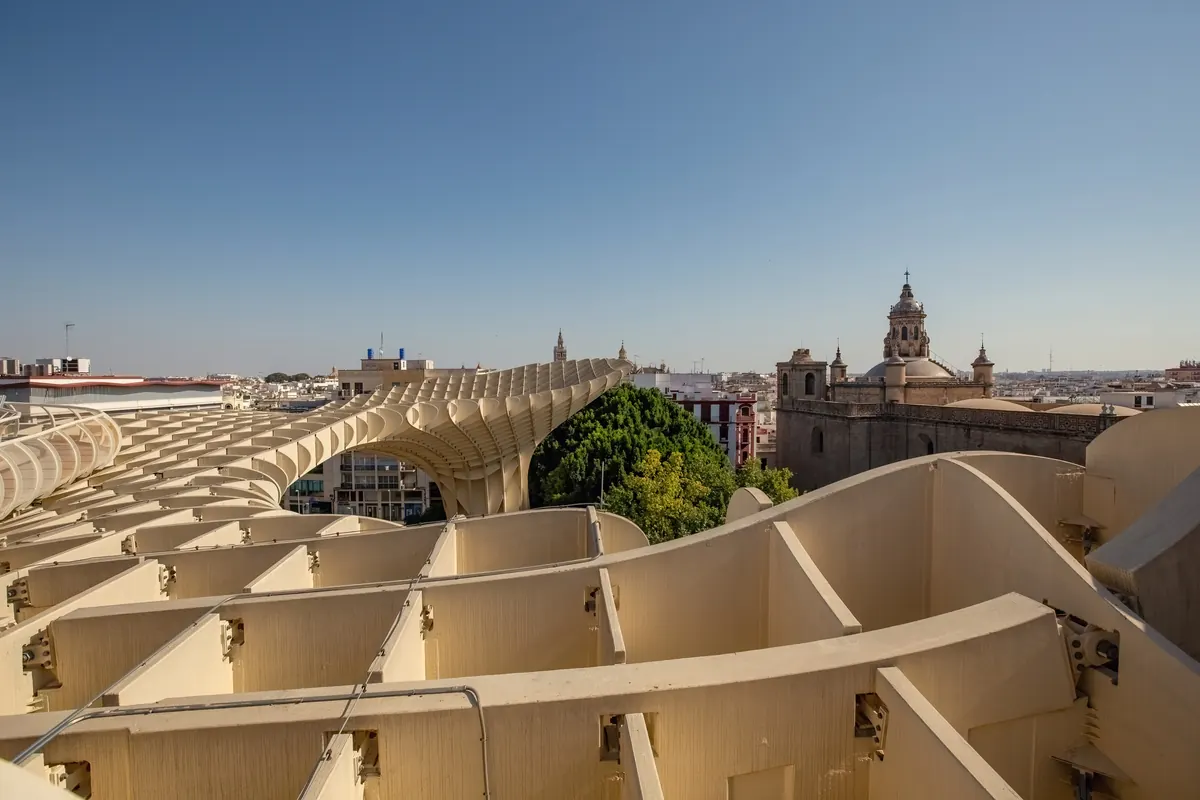
Best for: convenience, first-time long stays, access to everything
Centro is practical. You are close to shops, restaurants, sights, transport, and everyday services.
For remote workers who want everything nearby, Centro can make daily life easy. The downside is that central streets vary a lot. Some are calm, some are noisy, some are tourist-heavy, and some are a bad idea if you need quiet calls.
Pros
- very convenient
- walkable to major areas
- easy errands
- many food options
- good for first-time visitors staying longer
Cons
- can be noisy
- more expensive in some parts
- tourist traffic varies by street
- apartment quality can be inconsistent
Verdict
Centro is good if convenience matters most. Choose the exact street carefully.
Arenal
Best for: central comfort, couples, short-to-medium remote stays
Arenal is central and practical, sitting close to the Cathedral area, the river, and major routes. It can work well if you want a polished central base without being deep inside the narrowest Santa Cruz streets.
Pros
- very central
- easy access to major sights
- close to the river
- good for couples
- practical for evening plans
Cons
- can be touristy
- may cost more
- not always the most local-feeling option
- fewer quiet residential pockets than other areas
Verdict
Arenal is a good choice for remote workers who want comfort and convenience more than neighborhood edge.
Santa Cruz
Best for: short stays, first-time visitors, romantic atmosphere
Santa Cruz is beautiful. Narrow streets, whitewashed walls, orange trees, little squares: it looks exactly like many visitors imagine Seville.
But for digital nomads, it is not always the easiest base.
Pros
- beautiful
- close to Alcazar and Cathedral
- great for a first visit
- atmospheric streets
- very walkable
Cons
- tourist-heavy
- some streets are busy
- apartments can be small or older
- not always practical for work calls
- can feel too visitor-focused for long stays
Verdict
Santa Cruz is better for a short romantic stay than a serious remote-work month. Stay here if atmosphere matters more than daily practicality.
Nervion
Best for: practical living, transport, shopping, longer stays, quieter routines
Nervion is less charming than the historic center, but it can be more practical.
For digital nomads who care about transport, newer buildings, gyms, shopping, and everyday convenience, Nervion may be a better fit than the old town.
Pros
- more practical for daily life
- better for transport and errands
- potentially newer apartment stock
- less touristy
- good for longer stays
- easier for routine-based remote workers
Cons
- less historic atmosphere
- not as romantic
- further from some classic sights
- may feel less "Seville postcard"
Verdict
Nervion is not the prettiest choice, but it can be one of the most practical areas for longer remote-work stays.
Best Area Summary
| Area | Best for | Digital nomad verdict |
|---|---|---|
| Alameda | Social lifestyle, food, nightlife | Great for longer stays if you do not need silence |
| Triana | Local feel, tapas, river walks | One of the best balanced options |
| Centro | Convenience and errands | Practical, but choose the street carefully |
| Arenal | Central comfort | Good for couples and short-to-medium stays |
| Santa Cruz | Beauty and first-time atmosphere | Better for short stays than serious work |
| Nervion | Practical daily life | Best if routine matters more than charm |
Coworking in Seville
Seville has coworking options, but do not expect the same scale or density as larger digital nomad hubs.
For remote workers who need calls, reliable internet, a proper desk, and a separation between home and work, coworking can be very useful.
Coworking is best if you need:
- video calls
- focused work
- reliable Wi-Fi
- ergonomic seating
- routine
- separation from your apartment
- a reason to leave the house
Coworking may not be necessary if:
- you work part-time
- your apartment setup is excellent
- you mostly do asynchronous work
- you dislike shared offices
- you only need a few hours of laptop time per day
Before choosing a coworking space, verify current names, prices, opening hours, membership options, and day-pass availability directly with the venue.
Can You Work from Cafes in Seville?
Yes, sometimes. But cafe work in Seville should be treated as a light-work option, not your full office strategy.
Cafes are better for:
- emails
- writing
- planning
- admin tasks
- short work sessions
- working without calls
Cafes are not ideal for:
- long video calls
- all-day laptop use
- sensitive client work
- meetings requiring silence
- assuming you can occupy a table for hours during busy times
A good rule: use cafes for light work and coworking or your apartment for serious work.
Also, be respectful. If a cafe is small, busy, or meal-focused, do not turn it into your private office for half the day.
Internet and Mobile Setup
For remote work, do not arrive in Seville assuming everything will work perfectly from day one.
Before booking accommodation, check:
- Wi-Fi reviews
- whether guests mention remote work
- whether the host can confirm speed
- whether there is a proper workspace
- whether mobile data works well in the area
- whether the building has thick walls that may affect signal
For mobile data, an eSIM or local SIM can be useful, especially during the first few days.
Working remotely from Spain?
Set up mobile data before arrival so you are not hunting for Wi-Fi on day one.
Compare travel eSIM options
Accommodation Tips for Remote Workers
For digital nomads, accommodation is the biggest decision.
A beautiful apartment in a bad location, with weak Wi-Fi and a tiny table, can ruin the work side of your stay.
Before booking, check:
- air conditioning
- Wi-Fi quality
- desk or table
- chair comfort
- natural light
- noise level
- washing machine for longer stays
- kitchen setup
- elevator if needed
- heating in winter
- recent reviews
- flexible cancellation if possible
Air conditioning matters
This deserves its own warning.
If you are visiting in late spring, summer, or early autumn, air conditioning is important. In July and August, it is essential for most remote workers.
Do not rely on vague wording like "cool apartment" or "traditional building." Check that air conditioning is clearly listed.
Beware of old-town charm
Old buildings can be beautiful, but they can also mean:
- poor sound insulation
- awkward layouts
- small windows
- narrow staircases
- weak natural light
- inconsistent workspace
This does not mean avoid them. It means check carefully.
Staying more than a few nights?
Look for apartments or hotels with reliable Wi-Fi, a proper desk, air conditioning, and a central-but-livable location.
Compare long-stay places in Seville
Daily Life as a Digital Nomad in Seville
Seville works well if you like a slower, outdoor-friendly routine.
A good weekday might look like:
- morning work session
- coffee break or quick walk
- lunch later than you may be used to
- indoor rest or focused work during hot hours
- evening walk
- tapas or simple dinner
- weekend trip planning
The city is especially enjoyable if you do not try to live like a tourist every day. On a long stay, the best part is often the rhythm: familiar streets, repeat cafes, local markets, and a few favorite evening walks.
Weather and Summer Reality
Seville's weather is one of its biggest advantages and biggest problems.
Outside peak summer, the climate can be excellent for remote workers. You get outdoor life, bright days, and plenty of opportunities to walk.
In summer, the equation changes.
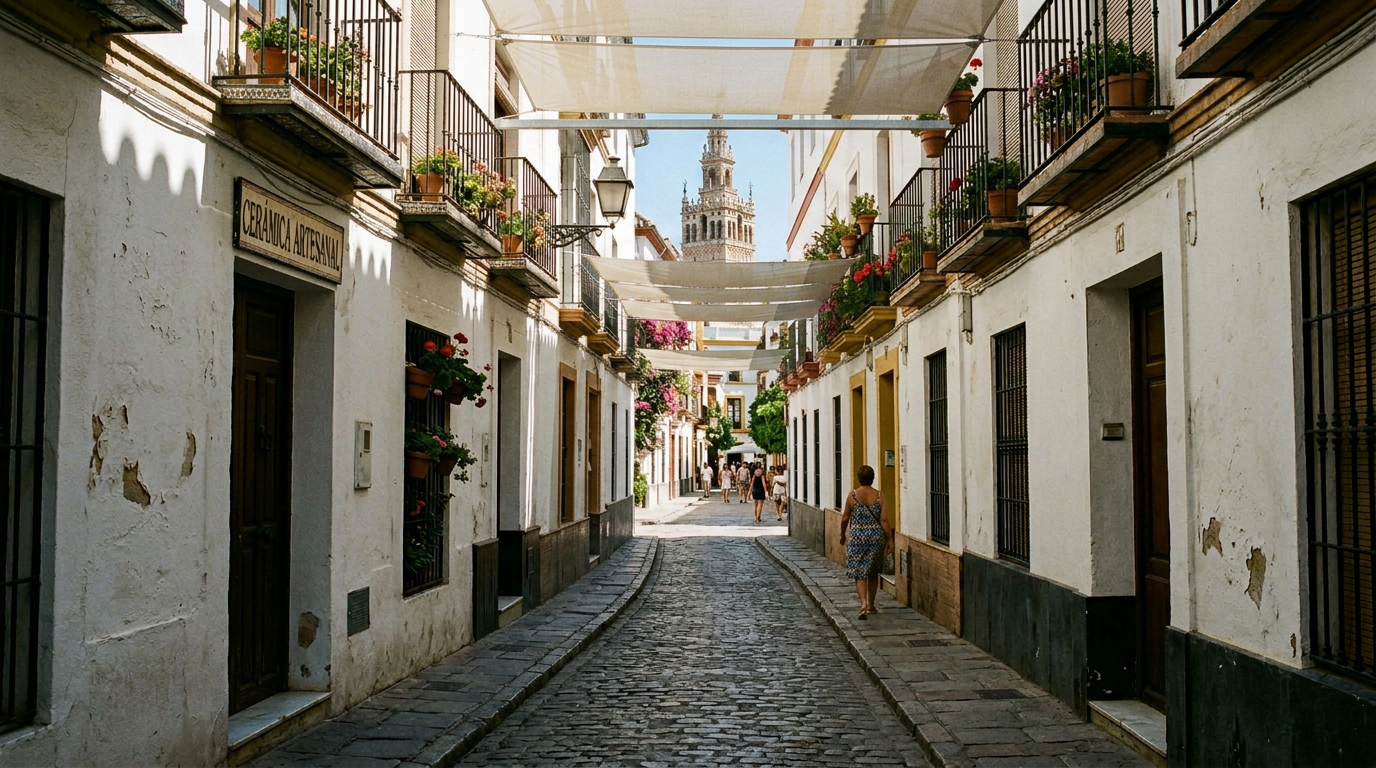
Summer tips for remote workers
- work early if possible
- avoid long walks from 14:00 to 18:00
- choose accommodation with strong air conditioning
- stay central to reduce unnecessary walking
- use coworking or indoor spaces during hot hours
- plan sightseeing for mornings and evenings
- do not overload your itinerary
Local note: In Seville, shade is not decoration. It is infrastructure.
For most digital nomads, the best long-stay months are autumn, winter, and spring. Summer can work, but only if you plan around the heat.
Transport and Walkability
Seville is one of those cities where the best transport plan is often: choose the right neighborhood and walk.
Central Seville is compact enough that many daily needs can be handled on foot.
Useful transport options may include:
- walking
- cycling
- tram or metro in selected areas
- buses
- trains for weekend trips
- taxis or ride-hailing for late nights or heat-heavy days
Check current transport prices, routes, ticket rules, and app options before relying on them for a long stay.
Food, Groceries, and Eating Rhythm
Food is one of the reasons Seville works well for longer stays.
You can keep things simple with groceries and home cooking, then enjoy tapas and restaurants when you want social evenings.
But the eating schedule may be different from what many visitors expect.
Dinner is usually later than in many countries. If you try to eat a full local-style dinner at 18:30, you may find fewer options open or busy.
For remote workers, this can actually be useful. You can finish work, go for a walk, and eat later without feeling like the whole city is closing.
Practical food tips
- choose accommodation with a usable kitchen for longer stays
- learn your closest grocery options
- do not rely on restaurants for every meal
- keep simple breakfast and lunch options at home
- use tapas nights as social time, not daily survival strategy
Weekend Trips from Seville
Seville is a strong base for exploring Andalusia.
Possible weekend or day-trip ideas include:
- Cordoba
- Cadiz
- Jerez de la Frontera
- Granada
- Malaga
- Ronda
- Italica
- smaller white towns depending on transport
For remote workers, this is one of the biggest advantages of basing yourself in Seville. You can work during the week and explore on weekends without constantly changing accommodation.
Check current train times, prices, schedules, and route options before booking.
Who Seville Is Best For
Seville is a good digital nomad base if you:
- want a beautiful walkable city
- prefer local character over big-city scale
- enjoy warm weather outside peak summer
- like food, architecture, and slower evenings
- want access to Andalusia
- do not need a huge international networking scene
- can work from an apartment or coworking space
- want a city that feels different from the usual nomad hubs
Who Should Skip Seville
Seville may not be the best fit if you:
- need cool weather year-round
- hate heat
- want a beach city
- need a huge tech or startup ecosystem
- want endless laptop cafes
- need late-night coworking every day
- dislike slower local rhythms
- want everything to run on northern European timing
Seville is not trying to be a productivity machine. It is better when you let the city shape your routine a little.
Final Recommendation
Seville is a strong digital nomad base for the right kind of remote worker.
It is best if you want a walkable, beautiful, culturally rich city with a slower rhythm and plenty to do outside work. It is especially good in autumn, winter, and spring, when the weather supports daily life instead of challenging it.
For most digital nomads, the smartest approach is:
- stay in Alameda, Triana, Centro, Arenal, or Nervion depending on your routine
- choose accommodation based on Wi-Fi, desk, noise, and air conditioning
- use coworking for serious calls if needed
- treat cafes as light-work spots
- avoid peak summer unless you are ready for the heat
- leave room for slow evenings and weekend trips
Seville can be a great place to work remotely. Just do not book the prettiest apartment on the internet without checking whether you can actually work there.
Remote work is easier when your base is right.
Use our Seville travel guide to plan neighborhoods, sightseeing, and slower days.
Read the Seville travel guide